
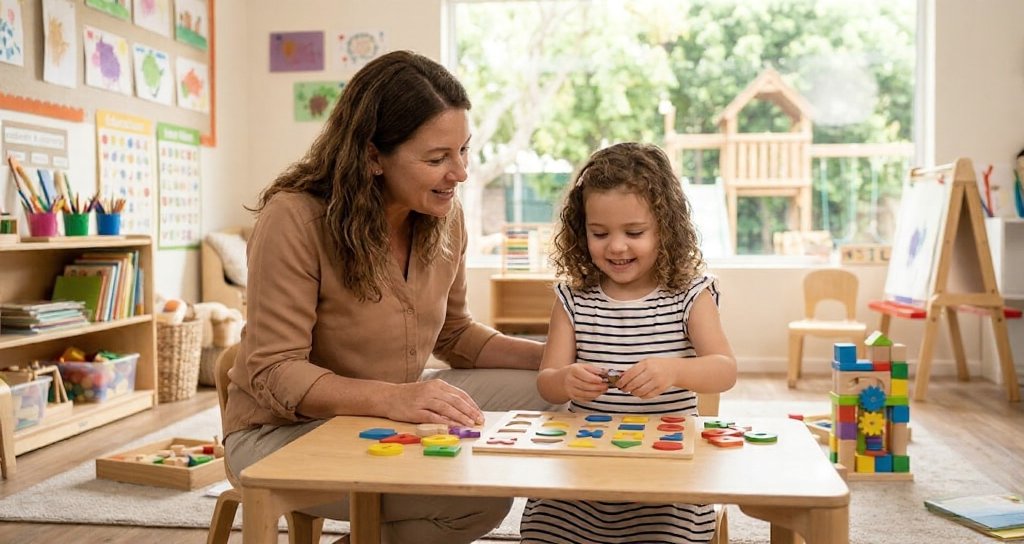
Many parents wonder: is preschool really necessary, or can children start their formal education at primary school? The importance of preschool education extends far beyond basic academics. It lays the critical foundation for lifelong learning, social skills, emotional development, and future academic success.
Research consistently shows that quality early childhood education provides children with significant advantages that last well into adulthood. Children who attend preschool demonstrate stronger cognitive abilities, better social-emotional skills, higher school readiness, and improved long-term outcomes in both education and career.
In Malaysia, where education is highly valued, understanding the importance of preschool education helps parents make informed decisions about their child’s early years. A leading preschool in Malaysia focuses on cultivating the right skills early, giving children a strong foundation for 21st-century success. This guide explores the cognitive, social, emotional, and academic benefits of preschool — and why it matters more than you might think.
Why Preschool Education Matters More Than Ever
The early years from birth to age six represent the most rapid period of brain development in a child’s life. During this critical window, a child’s brain forms over one million neural connections every second, creating the foundation for all future learning, behaviour, and health.
1. The Science Behind Early Learning
Neuroscience research reveals that 90% of a child’s brain development occurs before age five. Quality preschool education capitalises on this crucial developmental window by providing:
- Rich learning experiences that stimulate brain development
- Structured activities that build neural pathways for literacy and numeracy
- Social interactions that develop emotional intelligence and empathy
- Hands-on exploration that strengthens problem-solving abilities
2. The Achievement Gap Starts Early
Children who do not attend preschool often start primary school already behind their peers. This early achievement gap tends to widen over time, affecting academic performance, confidence, long-term educational attainment, and career opportunities. Quality preschool education helps close this gap before it begins, ensuring every child starts Year 1 ready to succeed.
Cognitive Development Benefits of Preschool
1. Language and Literacy Development
Preschool provides rich language environments where children expand their vocabulary through conversations, stories, and songs, develop phonological awareness, build pre-reading skills through letter recognition, and practise expressive language through group discussions. Children who attend preschool typically enter primary school with significantly larger vocabularies and stronger literacy foundations than those who do not.
2. Numeracy and Mathematical Thinking
Early maths concepts learned in preschool include number recognition, counting, one-to-one correspondence, patterns and sequencing, basic geometry, and simple problem-solving. These foundational skills predict later mathematics achievement more strongly than almost any other early indicator.
3. Executive Function Skills
Preschool helps children develop crucial executive function abilities including working memory, cognitive flexibility, and inhibitory control. These skills are stronger predictors of school success than IQ tests, and they are highly responsive to quality early education.
4. Curiosity and Love of Learning
Good preschool programmes nurture natural curiosity, intrinsic motivation to learn, positive attitudes toward school, and confidence in a child’s own abilities. Children who develop a love of learning in preschool carry this enthusiasm throughout their entire educational journey.
Social and Emotional Skills Learned in Preschool
While academic readiness is important, social-emotional development is equally critical for school and life success.
1. Peer Interaction and Friendship Skills
Preschool provides structured opportunities to share, take turns, cooperate in group activities, and resolve conflicts peacefully. These social skills are essential for primary school success, where children must navigate increasingly complex social environments.
2. Emotional Regulation and Self-Control
Quality preschool programmes help children identify and name their emotions, manage frustration and disappointment, calm themselves when upset, and develop empathy for others. Children with strong emotional regulation skills perform better academically and experience fewer behavioural challenges in school.
3. Independence and Self-Confidence
Preschool encourages age-appropriate independence through self-care skills, following multi-step directions, making choices, completing tasks independently, and asking for help when needed. This growing independence builds the confidence and self-efficacy that children carry into every new challenge.
4. Respect and Cultural Awareness
In diverse Malaysia, preschool exposes children to different languages, cultures, traditions, and family backgrounds. These early experiences build cultural competence and respect — valuable skills in our multicultural society that serve children throughout their lives.
Long-Term Academic Advantages
The importance of preschool education becomes even clearer when examining long-term outcomes for children who received quality early education.
1. Better School Readiness
Children who attend quality preschool programmes enter Year 1 with age-appropriate academic skills, adjust more easily to structured school routines, follow classroom rules and expectations, and form positive relationships with teachers from the very start.
2. Higher Academic Achievement
Research tracking children over time shows that those who attended preschool achieve higher scores on standardised tests, demonstrate stronger reading and maths skills, are less likely to repeat grades, require less special education support, and graduate secondary school at higher rates.
3. Enhanced Social Success in School
Preschool graduates typically make friends more easily, experience fewer behavioural challenges, develop positive relationships with teachers, and engage more actively in classroom activities throughout their schooling years.
How Preschool Prepares Children for Malaysian Primary Schools
Malaysia’s education system has specific expectations for Year 1 students. Quality preschool education bridges the gap between home and formal schooling in ways that make a measurable difference from day one.
1. Academic Preparation
Preschool aligns with national curriculum expectations by building basic Bahasa Malaysia literacy, English language foundations, number concepts and early mathematics, science curiosity and observation skills, and fine motor skills for writing.
2. Separation and Independence
Attending preschool helps children separate confidently from parents, trust other caring adults, navigate new environments independently, and solve problems without immediate parent intervention. This emotional readiness is as important as academic preparation for a smooth Year 1 transition.
3. Positive School Associations
Children who enjoy preschool associate school with fun and learning, approach new challenges with confidence, view teachers as helpful and supportive, and feel genuinely excited about continuing their education. These positive associations set the tone for their entire educational journey.
Choosing Quality Preschool for Maximum Benefit
Not all preschools provide equal benefits. The quality of the programme determines the outcomes children experience. When choosing a quality preschool in Malaysia, look for programmes that offer qualified teachers, low student-to-teacher ratios of 1:10 or better, developmentally appropriate curriculum, safe and stimulating environments, and regular communication with parents about their child’s progress.
Curriculum Approaches That Work
Effective preschool programmes often use play-based learning, thematic units, and a balanced approach that mixes structured and child-initiated activities. Our Montessori-trained teachers at COZO use child-directed, hands-on learning methods that develop independence, concentration, and a genuine love of discovery in every child.
Key Quality Indicators
When visiting preschools, look for children actively engaged rather than passively watching, teachers interacting warmly and thoughtfully with children, well-organised and material-rich classrooms, a balance of quiet and active play, and positive and respectful communication between staff and children.
An Investment Worth Making
While quality preschool requires financial investment, the long-term academic and social benefits, the prevention of future educational difficulties, and the development of lifelong learning skills make it one of the most valuable investments a family can make. The importance of preschool education becomes a wise investment in your child’s future when you choose a programme that truly nurtures development.
Conclusion
The importance of preschool education cannot be overstated. Quality early childhood education provides children with cognitive, social, emotional, and academic advantages that last a lifetime. From brain development and school readiness to social skills and love of learning, preschool builds the essential foundation for future success.
Ready to give your child the very best start? Explore the best preschool in Cheras and Bukit Jalil at COZO, where we combine fun, meaningful learning with proven educational methods to prepare children for bright futures. Book your campus visit today and see our holistic approach in action.
